Four ways to dance
Every tango event has its own rhythm. Pick the one that suits your weekend.
01
Festival
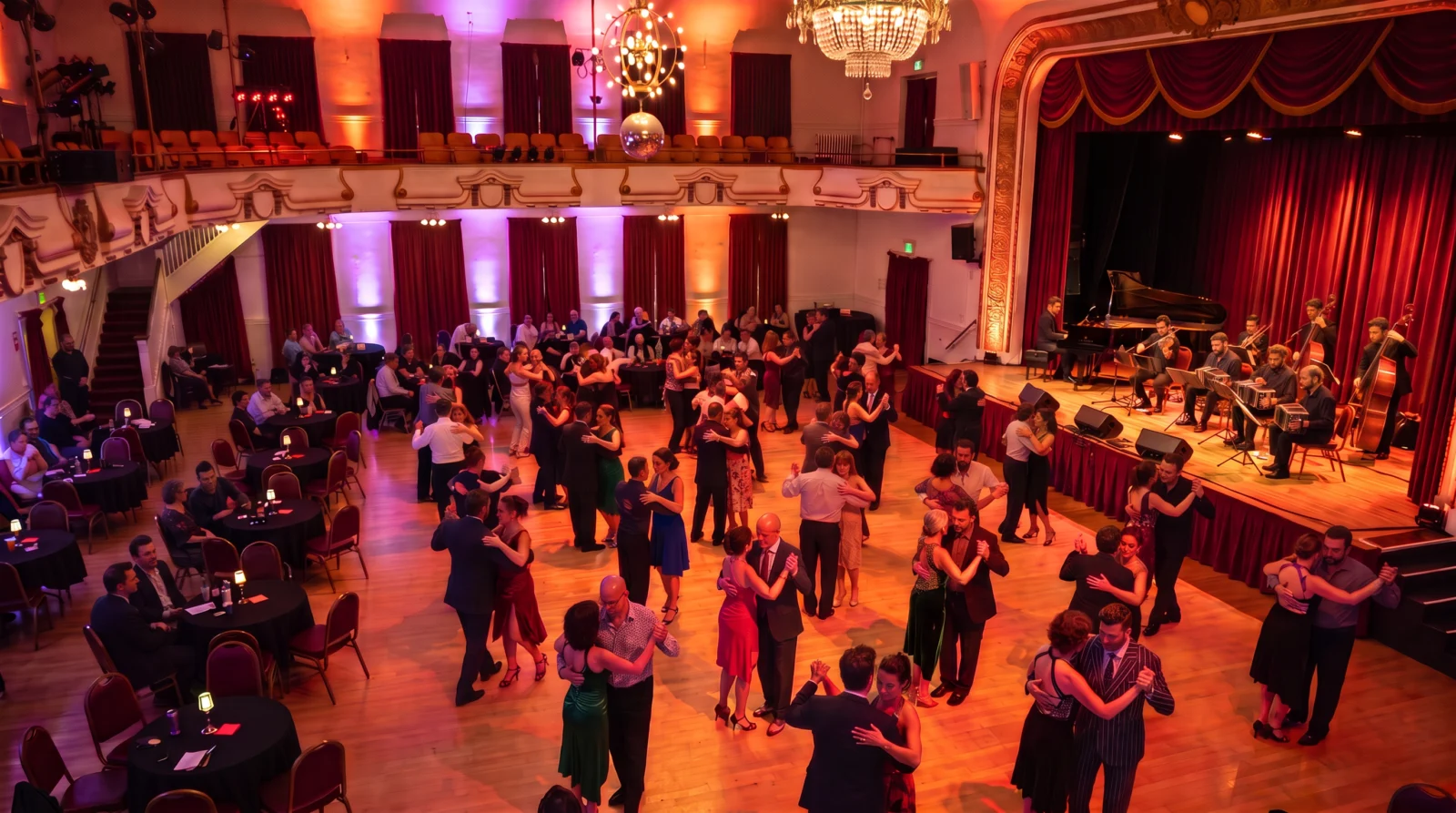
Classes by day, shows and milongas by night. Often with a live orchestra and teachers flown in from Buenos Aires.
02
Marathon
Social dancing from Friday night to Monday morning. No classes, no shows. Just tanda after tanda.
03
Encuentro
A smaller gathering built around the old codes: cabeceo, a steady ronda and Golden Age music.
04
Milonga
The regular social dance. One evening, a DJ, and the local community. This is where tango actually lives.
More than a calendar
Know what you're walking into.
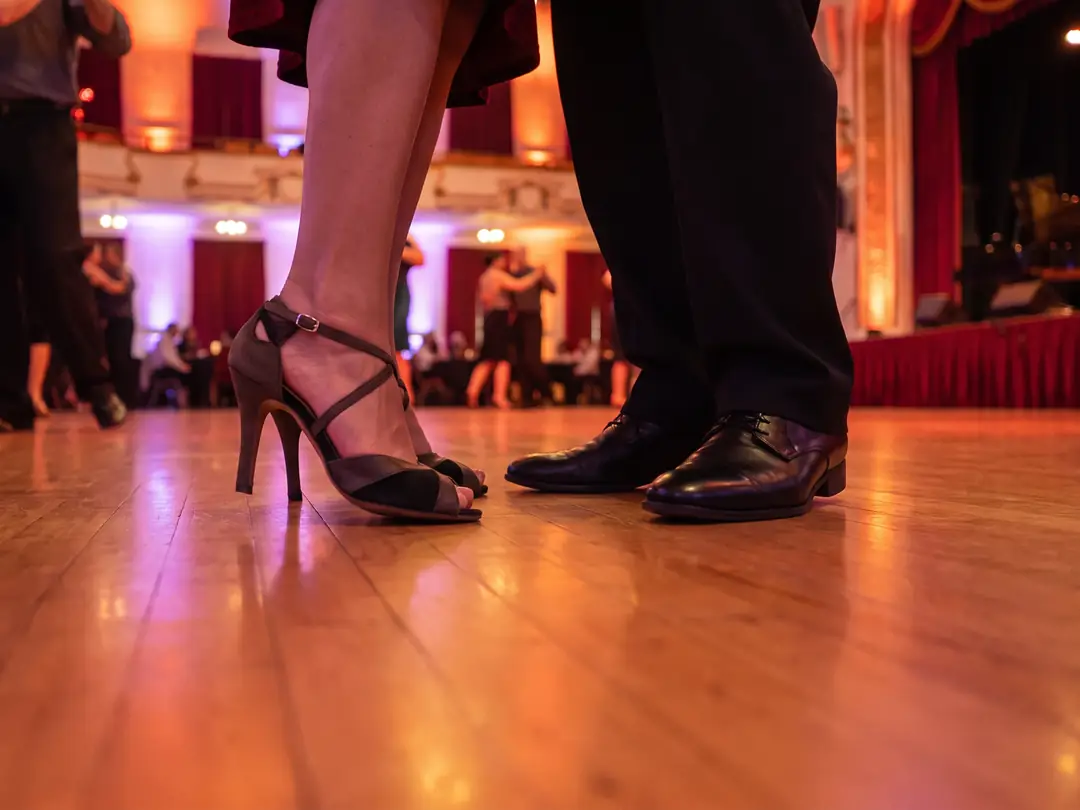
Listings tell you where and when. We add the part nobody writes down: how the floor moves, what the DJ is likely to play, and how to get a dance when you don't know anyone yet.
Tango information: etiquette, cabeceo, shoes, travel tips
Tango music: orchestras, singers, tandas and cortinas
Tango history: from the Río de la Plata to the world
Your first milonga
Three things worth knowing before you arrive.
The cabeceo
Dances start with a look and a nod from across the room. If you catch someone's eye and they nod back, meet them on the floor.
The tanda
Songs come in sets of three or four by the same orchestra. You usually dance the whole set with one partner.
The ronda
The floor moves counterclockwise in lanes. Keep your place in line and don't overtake the couple in front.
For every dancer
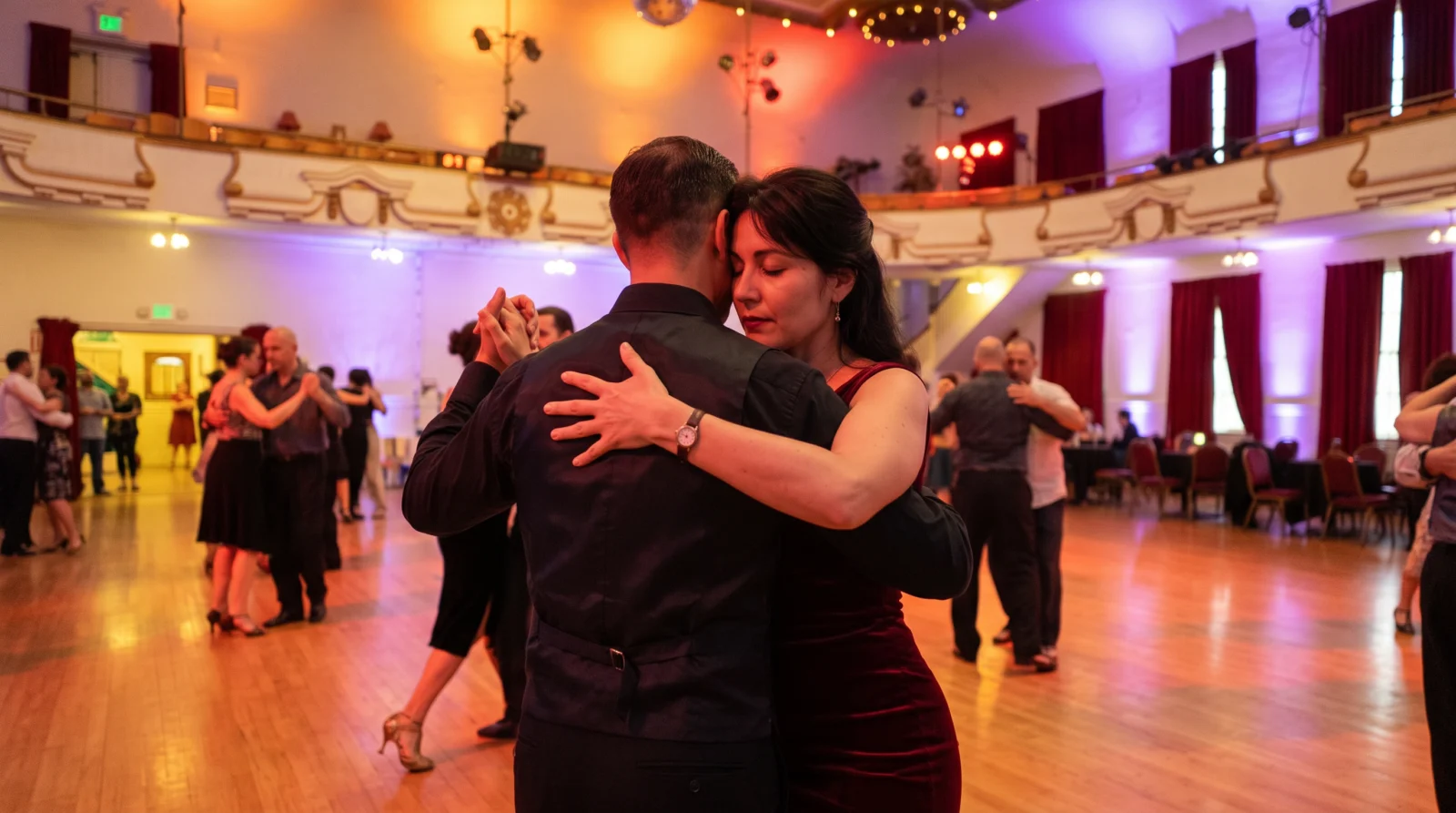
Beginner or thirty years on the floor, you're welcome here.
Some of us started last spring. Some of us have danced at Salon Canning more times than we can count. What we share is the habit of planning trips around where the next good milonga is.
Running a tango event?
Send us the dates, the venue and the DJs. We check every listing by hand and publish it free of charge.