Services
Everything you need to dance tango, at home or on the road.
Event information
Four kinds of tango event, explained plainly.
Each listing on TangoDestiny is tagged with one of these types, so you know what the weekend will feel like before you book the flight.
01
Festivals
The big ones. A festival mixes workshops with well-known teaching couples, stage performances and nightly milongas, often with a live orchestra. It's the best place to take classes and see how tango is danced at the highest level.
Length
3 to 5 days
Suits
All levels, including beginners
Good to know
Class passes sell out first
02
Marathons
A marathon is almost nothing but social dancing, usually from Friday evening until Monday morning. A rotating team of DJs keeps the music going. Many marathons balance registration between leaders and followers, so sign up early.
Length
40 to 60 hours of dancing
Suits
Dancers comfortable at a milonga
Good to know
Bring two pairs of shoes
03
Encuentros
An encuentro milonguero is a quieter, more traditional weekend. Seating is often arranged so leaders and followers face each other for the cabeceo. The music sticks to the Golden Age, and the ronda is taken seriously.
Length
Friday to Sunday
Suits
Close-embrace, social dancers
Good to know
Places are limited and often by application
04
Milongas
The weekly or monthly social dance run by a local community. One evening, one DJ, a mix of regulars and visitors. If you're travelling, a local milonga is the fastest way to meet the dancers in a new city.
Length
One evening, 3 to 5 hours
Suits
Everyone
Good to know
Many open with a beginner class
Tango information
The unwritten rules, written down.
Our guides cover the practical side of social tango. They're short, and they come from dancers who learned most of this the awkward way.
How the cabeceo and mirada work, and how to decline politely
Floorcraft: lanes, the ronda and dancing in a crowd
Choosing tango shoes and packing for a dance weekend
Dance codes that change from city to city
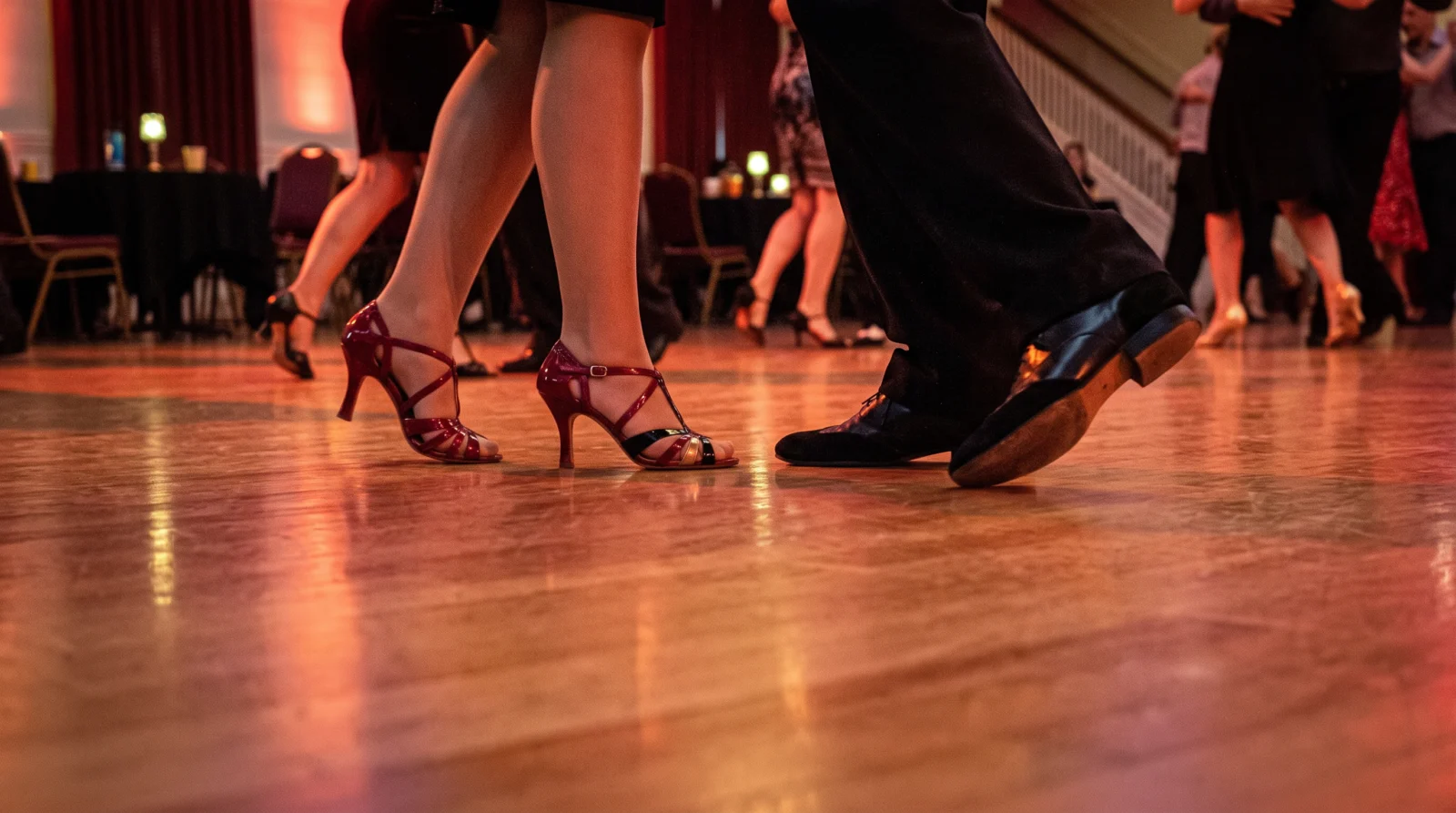
Tango music
Learn to hear the difference between D'Arienzo and Di Sarli.
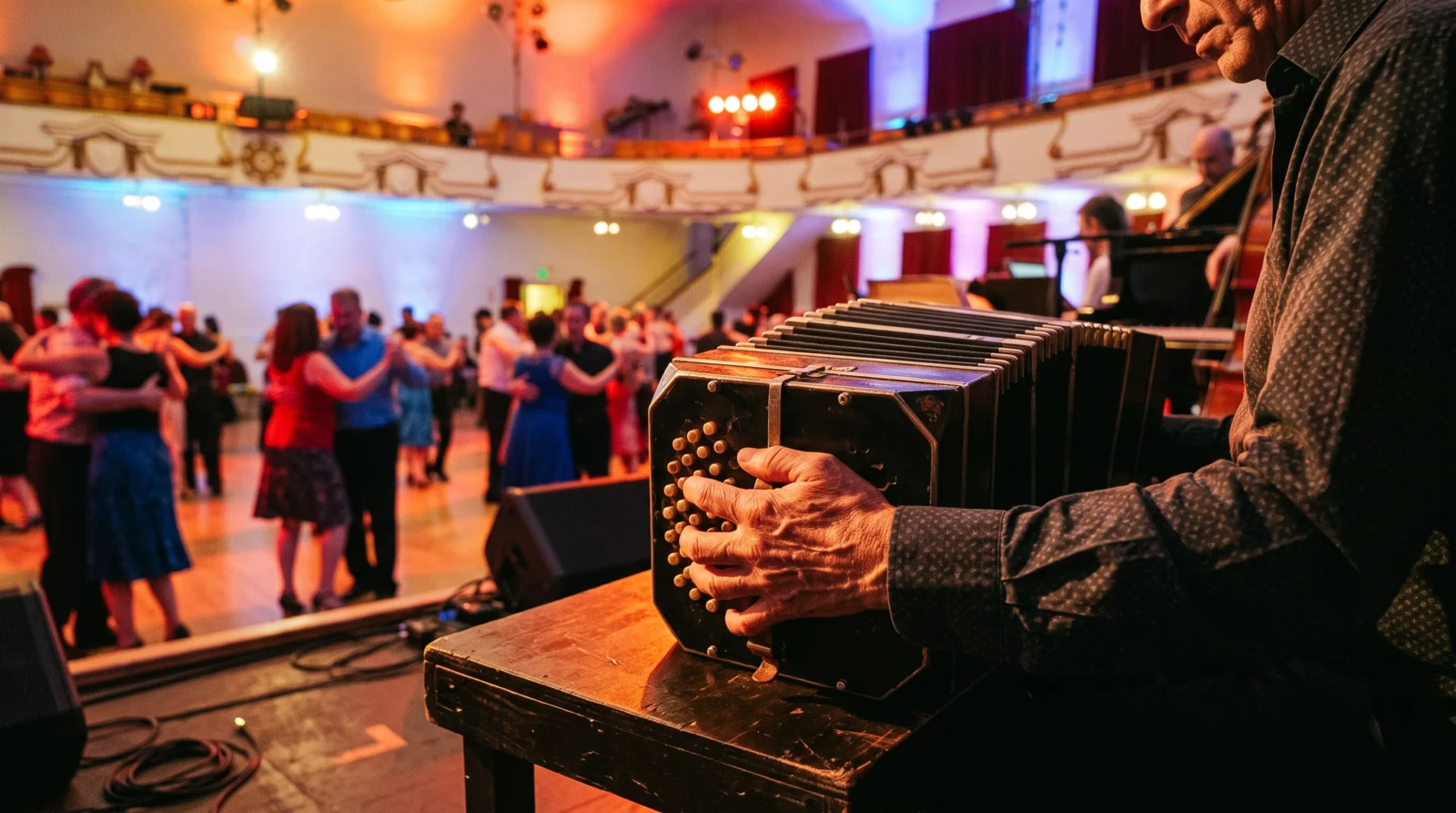
Once you recognise an orchestra in the first few bars, you know how to dance it. Our music pages introduce the Golden Age orchestras, their singers and the recordings DJs return to again and again.
Tango
The heart of every tanda. A walking pulse in 4/4 that can be crisp and rhythmic or slow and lyrical.
Vals
Tango's waltz, in 3/4. It turns and flows, and it tends to fill the floor.
Milonga
The older, faster cousin. Playful, quick on the feet, and often danced with a smile.
Tango history
From the port of Buenos Aires to a Tuesday night near you.
1880s
Born on the Río de la Plata
Tango grows in the working neighbourhoods of Buenos Aires and Montevideo, shaped by European immigrants, African Argentine rhythms and the local milonga.
1935 to 1955
The Golden Age
Big orchestras play to packed dance halls. Most of what DJs play at milongas today was recorded in these twenty years.
1983
Tango goes abroad
The stage show Tango Argentino opens in Paris, then Broadway. Dancers around the world start looking for classes.
2009
World heritage
UNESCO adds tango to its list of the Intangible Cultural Heritage of Humanity, recognised jointly for Argentina and Uruguay.
Missing an event or a topic?
Tell us what you'd like to read about, or send in the milonga your community runs every week.